

General Catalyst's Marc Bhargava sits down with Serval co-founder and CEO Jake Stauch, who built an employee support platform on code generation when AI could barely write working code. Serval’s mission is to resolve IT, HR, finance, and other workplace problems before employees file a ticket, automating the automation.
This interview has been edited and condensed. Watch the full video below.
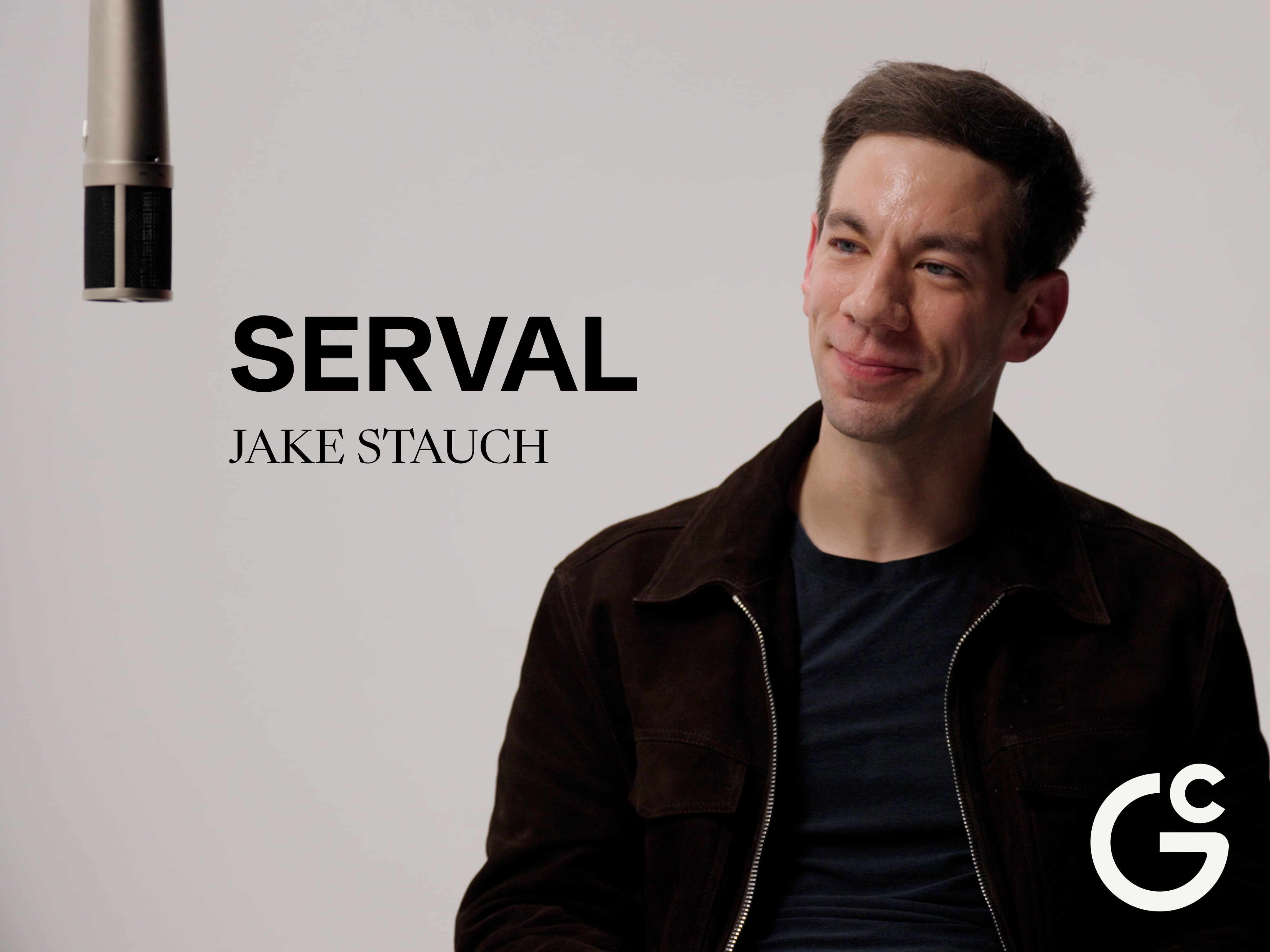
Marc: Tell me about your background. Where did your entrepreneurial streak come from?
Jake: My mom was a professional pool player who started a pool magazine, so I saw entrepreneurship up close growing up. In college, I joined an entrepreneurship living group, basically a fraternity where everyone was starting companies. If you took a job, they kicked you out. I started a company testing advertisements with brain scans, dropped out to run it, and it eventually became a company building video games controlled by your brain to help kids with ADHD. I ran that for about seven years. It was not a rocket ship. Early success, then it flatlined. ADHD medication is covered by insurance, pretty safe, and pretty effective, and that's tough to compete with.
Marc: How did you end up at Verkada, and what did you take from it?
Jake: My wife got a call from someone she knew there, she was busy, and she passed the phone to me. I'd been grinding for seven years without ever feeling that pull of product-market fit, and I didn't know what I didn't know. I wanted to see what a company that was working looked like. I joined as an early product hire and watched it go from about 100 employees to 2,500. Early on, I got paired with a new director of engineering, Alex [McLeod], to go after new markets, and we were always building with IT teams. They kept giving us insight into problems that had nothing to do with anything Verkada built. For a while we dismissed those and steered the conversation back to things you can plug into the wall. Over time we realized the gap was IT automation. IT wants to automate everything, they've got all these boring, manual parts of the job, and the tools weren't cutting it. That became the foundation of Serval.
Marc: How did you decide to make the leap to scale Serval? You were a new dad.
Jake: It's something you feel compelled to do. The timing was just not great. I had a newborn and Alex had a one-year-old. But this was late 2023, early 2024, and AI was reaching the point where you could really imagine building enterprise applications. It was my paternity leave that gave me the space to ideate. That's when we first started talking about Serval.
It was my paternity leave that gave me the space to ideate.
Marc: What customer discovery did you do before raising and building?
Jake: A ton, and we started from scratch with non-Verkada customers. I struggled at first because IT is not a complaining bunch. You ask what's keeping them up at night and you get, I don't know, maybe a cybersecurity breach. IT solves things for themselves. So I pivoted the question: if you could hire somebody to sit next to you and do work for you, what would you give them? That was such an unlock. They have a bunch of work that isn't their favorite, but they don't think of it as a pain. It's just the job. What emerged was that automation is the pain point, and specifically building the automations. There are plenty of drag-and-drop workflow builders but they didn't have time to use them. So the core idea became: what if we could automate the automation? And in turn that gives you a great employee support experience, because employee support is an automation problem.
Marc: Where do you start when the surface area is as broad as ServiceNow's? And how do you beat an incumbent that has thought about this for decades?
Jake: You ask what the biggest bet is, and you build that first. The reason IT teams don't automate more is that building the automation takes longer than doing the manual task, so they default to manual. But you can usually describe an automation in a sentence or two. What if you could start there and the automation builds itself? If we built another drag-and-drop builder we couldn't compete. So the first thing we built was a code-generation agent that takes a natural-language description of an automation and turns it into code that executes it.
On ServiceNow, you have to acknowledge they did so much right. What they did well is configurability: they could go into any company, map its workflows, and build a custom experience no matter how long-tail the use cases. We have to do that better. Serval's workflow engine is all code under the hood. Codegen is the central primitive, not just for help desk tickets but for onboarding, offboarding, knowledge base lookups, updating asset tables. End users build these automations instantly instead of contracting consultants. And IT is such an untapped resource. You have these motivated, technical people running around resetting passwords, and they want to build. Now they have the tools.
IT solves things for themselves. So I pivoted the question: if you could hire somebody to sit next to you and do work for you, what would you give them?
Marc: In April 2024 that didn't work. We were still in the autocomplete days of codegen.
Jake: The models weren't there. GPT-4 had just come out. But if you gave it the API, an example workflow, all this context, and cheated a little, you could squint and see it getting there. And from first principles, coding is a verifiable domain, so there's a ton of data plus the ability to check results automatically. So we made it work for a set of use cases, then built the things that are hard but known to be doable: a great ticketing platform, access management, everything else. At first, the models getting better was existential. Now, as they get better, it flows straight through into product improvements.
Marc: Is there a threat that the labs do everything Serval or ServiceNow does?
Jake: You never write off teams that talented with that much capital. But it comes down to focus. Enterprise service management is a large problem, but at Anthropic's scale it's relatively small. And this is not a wrapper on top of the models. ITSM existed long before AI and is enhanced by it. You could buy Serval with no AI capabilities at all. The long tail of problems is enormous. A chatbot can fetch the Wi-Fi password. But an approval for access to a sensitive engineering resource, where the approving manager is on vacation, so you sync with his calendar and figure out who approves in his place, and who's allowed to delegate that? That's one use case. Multiply it across the enterprise. We embrace that.
Marc: Tell me about winning your first customer. Mercor, Together, Perplexity, and Ramp all work with you, and you're only two years old. How?
Jake: It was hard to get the first one. Perplexity was our first paying customer, and it took over a year. We're replacing a legacy system, so we need a lot of surface area, and small startups don't need an ITSM. Then you have barely enough product to sell, so the only companies who value your approach are fast-moving tech companies who believe you'll ship what's missing. What surprised us is how quickly that expanded into accounts with over 100,000 employees, Fortune 20 accounts, very early in our life. The fundamental problems are remarkably similar, so one product serves both. Increasingly, I see this going outside of tech. Blue Diamond Growers, the almond company, is a customer. Every company with computers needs IT support.
Marc: Does the product expand beyond IT?
Jake: We love starting in IT because they hold the keys and credentials to every system. But we expanded quickly into HR, finance, legal. The average company on Serval has 13 departments on it, so IT is actually a minority. Where the product is going is autonomy: instead of telling the system what you want, it figures out your problems and builds solutions. The best way to support employees isn't to automate their support request. It's to prevent it. Say you get promoted onto a team and you have different permissions than everyone else. You're going to request access to all of it and wait through approvals. What if a scanner detected that you don't have the tools you need and just gave them to you? In reverse, if you have access nobody else in your role has, cut it off. Background agents that discover problems across the organization, then build and deploy the tools that fix them. Codegen makes that possible: we build the tools that investigate the problem and the tools that remediate it.
The best way to support employees isn't to automate their support request. It's to prevent it.
Marc: You've attracted applied AI engineers with offers from the labs. How? And tell me about the future-founders program.
Jake: An incredible place to work is made possible by incredible colleagues. If you start with a core group of the most talented, hardworking people imaginable, people walk into the office and think, this is the group I want to be part of. Then that core recruits people who match those values, and it becomes gravity. The future-founders program came from a gap: the models are really good, but transforming a large enterprise with AI is still really hard. Forward-deployed engineers fill that gap. You talk to the customer, understand their requirements, build what they need, then sell it to them. The person who's good at that is a founder. So we built a program for future and often former founders to do exactly that across IT, HR, finance, and legal at large enterprises. They get to build the wrong thing, fix it, and build it again. You don't get many of those repetitions going it alone, because often people never buy what you're selling.
Marc: You're building with your best friend as co-founder and your wife as COO. What's that like?
Jake: It lets you move so much faster. Infinite bandwidth, all knowledge shared all the time, total alignment. Before Serval, my wife and I talking about work was like someone describing a TV show you don't watch. Now we're talking about our favorite show, because we're living it all day. It works because we were talking about work anyway.