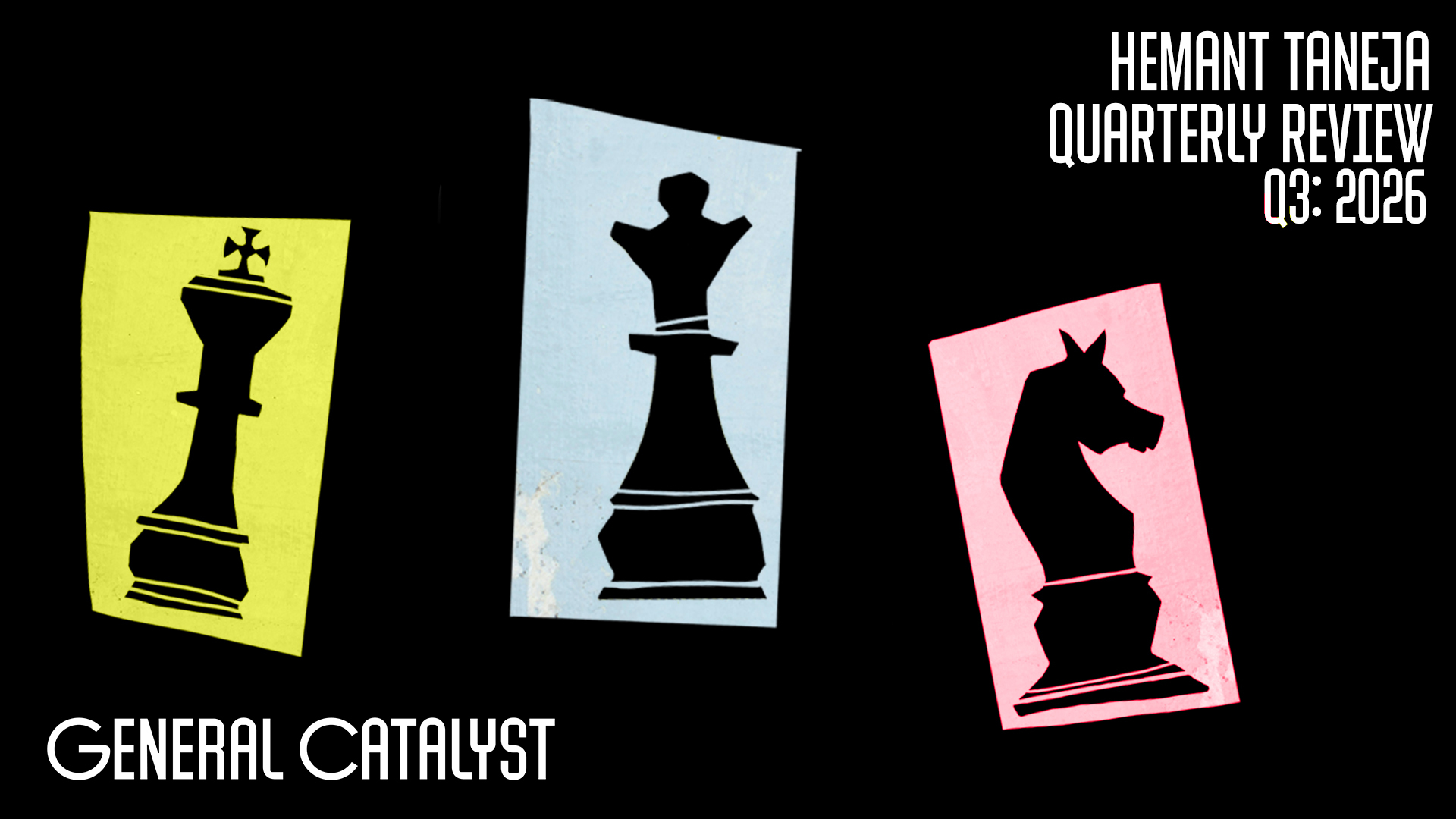
How do you break a race that no one can afford to lose?
In his Q3 review, Hemant Taneja argues that AI’s greatest risk is a prisoner’s dilemma built on low trust, where every player keeps racing for fear of falling behind. He looks to history for the way out, from Cold War arms control to the weekend Silicon Valley Bank failed, and explains why General Catalyst backs both closed frontier labs and open models.
He also introduces the resilience premium, the value of a system built to absorb shocks, which markets still underprice. And he shows that trust can be earned. General Catalyst bought Summa Health a year ago through HATCo and has been rebuilding it from the inside with its technology stack.our in five clinicians at Summa now opt in for AI note-taking, up from one in five.
Breaking the dilemma requires a costly first move and rules that make cooperation last.
For founders, that means building at the frontier without depending on any single lab. More broadly, this translates to an AI economy that no one company or government can switch off.
Read the full review here.