
2025 was a landmark year for defense reform. Policymakers in DC moved decisively to streamline acquisition, expand authorities for commercial technology adoption, empower the acquisition workforce, and signal that speed to delivery is the new standard. A new bipartisan policy foundation has been laid, with authorities and directives in place to make 2026 a meaningful year of implementation.
At General Catalyst, we've been investing in companies reimagining how technology reaches the warfighter, from autonomous systems and resilient communications to defense manufacturing and AI-powered decision support. Through GCI's engagement with policymakers, military leaders and portfolio companies, I've seen firsthand how the reform momentum of the past year is opening doors that were previously locked shut for innovative companies. That’s why we developed our new report, U.S. Resilient Defense: Delivering Warfighter Speed and Agility, which offers a framework to complement and accelerate the transformation already underway.
For founders building the defense resilience stack, this momentum presents tremendous opportunities. As the Pentagon adopts new mechanisms to embed innovative capabilities, startups must also transform how they partner with and deliver outcomes to government.
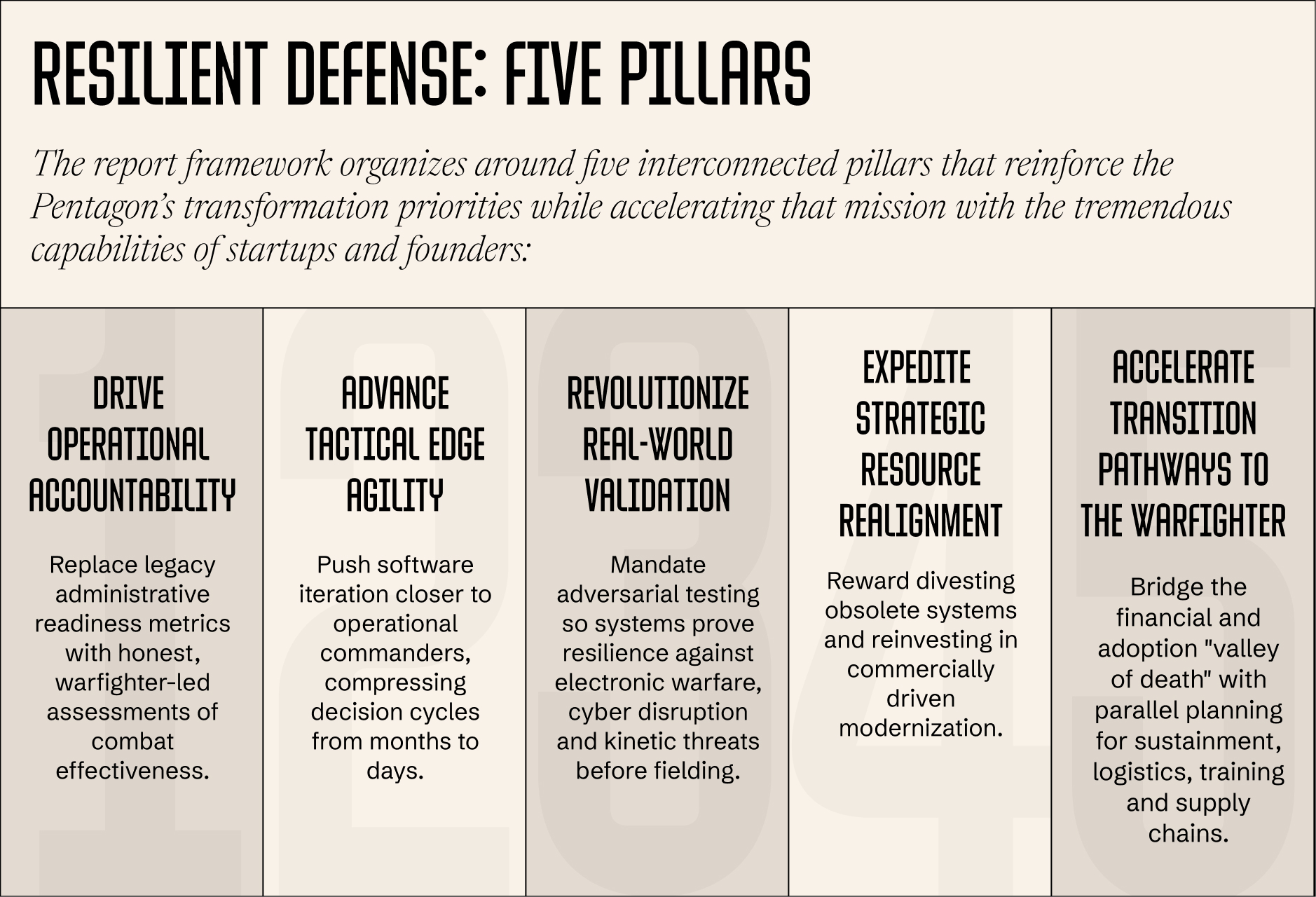
What This Means for Founders
The report and trendlines that inform it present opportunities for founders to build companies that meet future needs while also leveraging government sales as a growth strategy to scale faster. Here’s how:
Build for the stress test, not the demo: Design your systems from day one to perform in contested, degraded environments. When you demonstrate your prototype, present not just technical specs but a clear operational integration plan. The startups that win will be the ones whose technology exposes gaps in legacy systems by proving superior performance under pressure.
Plan for production and sustainment on day one: Founders should design for manufacturability, maintainability, and scalability from the start. Show up with a plan that goes beyond the prototype. Demonstrate you can sustain what you build.
Position your solution as the replacement, not the add-on: Frame your technology around what it replaces, not just what it does. Build your business case around the capabilities gaps created by divesting old platforms and new warfighting realities. Quantify the cost savings. Make it easy for a service secretary to point to your capability as the reason to retire old hardware and redirect those dollars
Policymakers built a strong foundation for defense transformation in 2025. Now it's time to execute. That requires the full ecosystem: startups, defense partners, Congressional leaders, civilian and military officials, and the private capital that fuels innovation.
For founders, this is the moment to lead from the front. Seize the advantages that new policy and authorities are providing you, turning them into deployed capability. Partner proactively with operators and build companies that don’t just sell into the system but help rewire it. The technology exists. The authorities exist. The private sector is ready. 2026 is the year we turn reform into results.
%201.svg)