

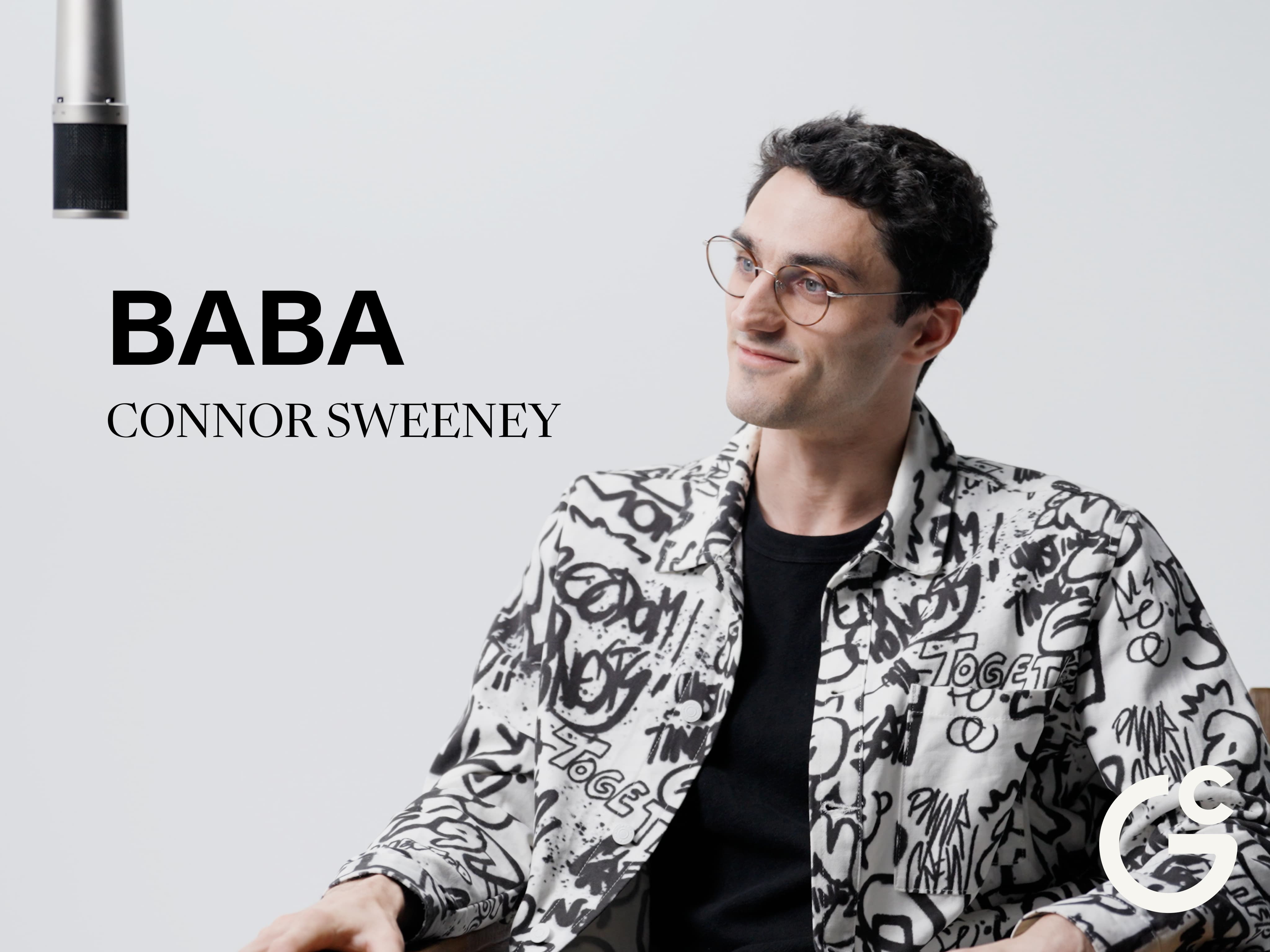
Baba founder Connor Sweeney changed the trajectory of his career after watching his grandfather become his grandmother’s full-time caregiver overnight. His company pairs Medicare patients and their caregivers with nurses, social workers, and community health workers, equipped with AI, who stay by each person’s side until they get the care they need. General Catalyst’s Vedant Suri sits down with Connor to talk about why Baba is betting on people in a sea of chatbots.
This interview has been edited and condensed. Watch the full video below.
Vedant: What is Baba, and who is it built for?
Connor: Baba connects people on Medicare and their family caregivers with a dedicated human advocate, usually a nurse, social worker, or community health worker who's seen the healthcare system up close for decades. Our advocates take on the administrative overwhelm that comes with any part of healthcare: making appointments, arranging transportation, filling out forms, knowing which program pays for what, and knowing how to get the local benefits office to reply now instead of seven months from now. And because Baba is covered by insurance, it's accessible to the 99% of Americans who can't pay hundreds of dollars an hour out of pocket for that kind of help.
Vedant: On New Year’s Day 2023, you received a phone call that changed the course of your career. Tell me what happened.
Connor: I was living in Los Angeles, working in the creator economy, when my mom called. My grandmother had had a stroke the night before while driving through southern Delaware. She waited several hours to be airlifted to Thomas Jefferson University Hospital in Philadelphia, and she was left with aphasia. Overnight, my grandfather, who I call Baba, which is where the name comes from, became a full-time caregiver. That meant constantly advocating for more occupational, speech, and physical therapy, and navigating a healthcare system they'd never had to deal with before. I'm probably the least likely person to be building in this space, but that personal event is what got me into healthcare.
Vedant: You moved back to Delaware and cloned your grandmother's voice. Tell us about that.
Connor: I'm an engineer and scientist by trade, in synthetic biology, so my instinct was to go to the literature. Everything I read on stroke recovery came back to familiarity. There's research suggesting that if you can hear how your own voice used to sound while you relearn to speak, you recover faster. I'd been playing with early ElevenLabs and realized you could clone a voice with reasonable fidelity. So I crowdsourced old voicemails from everyone's phones in my family, went with her to speech therapy at the University of Delaware to learn the exercises, and built her a speech therapist at home that sounded just like her.
Vedant: When did it go from something that happened to your family to a company?
Connor: In 2024 and 2025, AI was the dominant conversation, and people were rethinking what a team needed to look like to win in industries that hadn't seen much innovation. When you think about what AI actually solves, healthcare is the best frontier. Siloed, multimodal information that needs to be stitched together in a longitudinal context: that's literally the definition of healthcare. I also have a thesis that healthspan is downstream of wealthspan, and most companies have kept those two things separate.
I also have a thesis that healthspan is downstream of wealthspan, and most companies have kept those two things separate.
When you've been an engineer your whole life, gone to a place like MIT, and then watched the speed of AI, everything feels like it's on the cusp of being solved. And once you learn that recovery is dictated by how much budget someone's insurance plan has for a certain type of therapy, you start asking why they can't have more of it.
Vedant: Who are your advocates, and how do you find them?
Connor: Advocates are at least half the business. Our advocate team is led by Alicia Tennenbaum, who spent decades at Mount Sinai as director of social work and then executive director of care transitions, so clinical rigor is part of our DNA. Many of our advocates are retiring nurses who don't want to be on their feet as much. This is a flexible, remote role with tools their Electronic Health Records (EHRs) never gave them. I hear almost daily that ours is the most beautiful EHR they've used, and I've had doctors try to pay for it. We vet carefully, with mock scenarios where candidates text and call a frustrated client, and we test whether they can navigate a SNAP application or understand what a cardiovascular event entails. The best sign is that they're all asking for more hours and recruiting their friends.
Vedant: Baba is less than a year old and has already touched 15,000 families. What stories stay with you?
Connor: Our advocacy covers the traditional medical side, like a stroke or a cancer diagnosis, but also what the administration now calls upstream drivers, historically known as social determinants of health: food, electricity, transportation, safety at home. Right around Christmas, a woman in Ohio called because her electricity was going to be shut off in 48 hours, and she was afraid she'd freeze. Her advocate connected her with local utility assistance. A couple of weeks later, the same advocate heard a familiar voice in the background of a new intake call. She'd referred her husband to Baba. She tells everyone we saved her Christmas.
She tells everyone we saved her Christmas.
Another client, a younger woman in Sarasota who qualified for Medicare early, had just been diagnosed with cancer and was living in an abusive household. She kept saying every resource her therapist suggested had rejected her. Bringing her therapist into the circle of care revealed something different. She hadn’t been rejected so much as she’d braced for it, walking away before the options available to her could play out. Now the therapist and our advocate work together, and she's getting the treatment she needs.
Vedant: Care coordination isn't a new problem. Why is it solvable now?
Connor: The Centers for Medicare & Medicaid Services has recognized that this type of care coordination moves the needle. Peer-reviewed research shows meaningful reductions in hospital readmissions and ER visits. Many of the system’s costliest problems, and much of what makes people unhealthy, come down to what people don’t know: that they should see a doctor once a year, that they likely qualify for food stamps, or that grab bars in the shower can prevent a fall and a hip replacement that taxpayers end up funding. There's now a form of reimbursement that lets businesses be built around this. That gets at a core problem in healthcare: good care often doesn't map directly to a business model.
Vedant: You call Baba "the American healthcare company." What do you mean by that?
Connor: I get annoyed when people call the American healthcare system broken. You couldn't write something lazier. What we have is a care coordination challenge. I wish my grandmother's local hospital had had the resources to treat her. But within a short time, she was flown by helicopter to one of the best hospitals in the world and got life-saving treatment from doctors who didn't know her or my family and treated her with the same urgency as anyone else. And the system covered most of the cost.
I write that Baba is a story of redemption. Part of the job is proving that people should be proud of their tax dollars covering American healthcare benefits, and that's as much a marketing challenge as a product one. We have the most generous benefits and the brightest doctors in the world. I think about the book Unreasonable Hospitality by Will Guidara. People in healthcare bust their ass for complete strangers who walk into the lobby. They should have the tools to do that, and the support to make sure those people stay afloat after they leave.
Vedant: What qualities do you look for when hiring?
Connor: Smart, committed people figure things out. Even if you start with the wrong thesis or the wrong market, they take more shots on goal and think in systems. More than half our team are former founders. Healthcare isn't Jane Street in most new grads' minds, so we look for people who want to see a fast-moving team up close. Baba is a place for former founders and future founders alike.
Vedant: One of Baba's values is playing to win while understanding the responsibility that comes with it. How do you balance the two?
Connor: Patients can end up worse off if they come to rely on a company that doesn't have the business model or the competence to last. Taking away a lifeline someone depended on is the worst position you can leave them in. If a creator platform fails, no one dies. Every patient is a different combination of where they live, their health needs, their comorbidities, and their resources. Serving all of them takes people who move fast and with the right capital.
Vedant, you were the first institutional fund to back me, when I had no healthcare background, no team, and no tech. We met, you got conviction within a week, and two days later you were at your wedding. What was going through your head?
Vedant: I remember our walk on Fillmore in Pacific Heights. You had the intense curiosity, the competitiveness, the drive, and a way of approaching problems without preconceived notions of how to build a company, assemble a team, or take on the healthcare system. The speed of our conviction reflected the urgency with which you were moving. There wasn't a discussion about who else would join the round or why you didn't have a co-founder. It was: Connor is going to build a company of consequence, and we'd be remiss not to partner with him now. The idea wasn't fully formed yet, and that's what excited me. It felt like an opportunity to build something together.
Connor: I appreciate that. People took a bet on us, and we have an obligation to use what we've been given to create something good. That's another reason why we call Baba the American healthcare company. If there's a need to be met and a positive impact to be made, and if we make a ton of money in the process, that's how the system is supposed to work. We haven't forgotten the privilege to pay it forward.