.jpg)
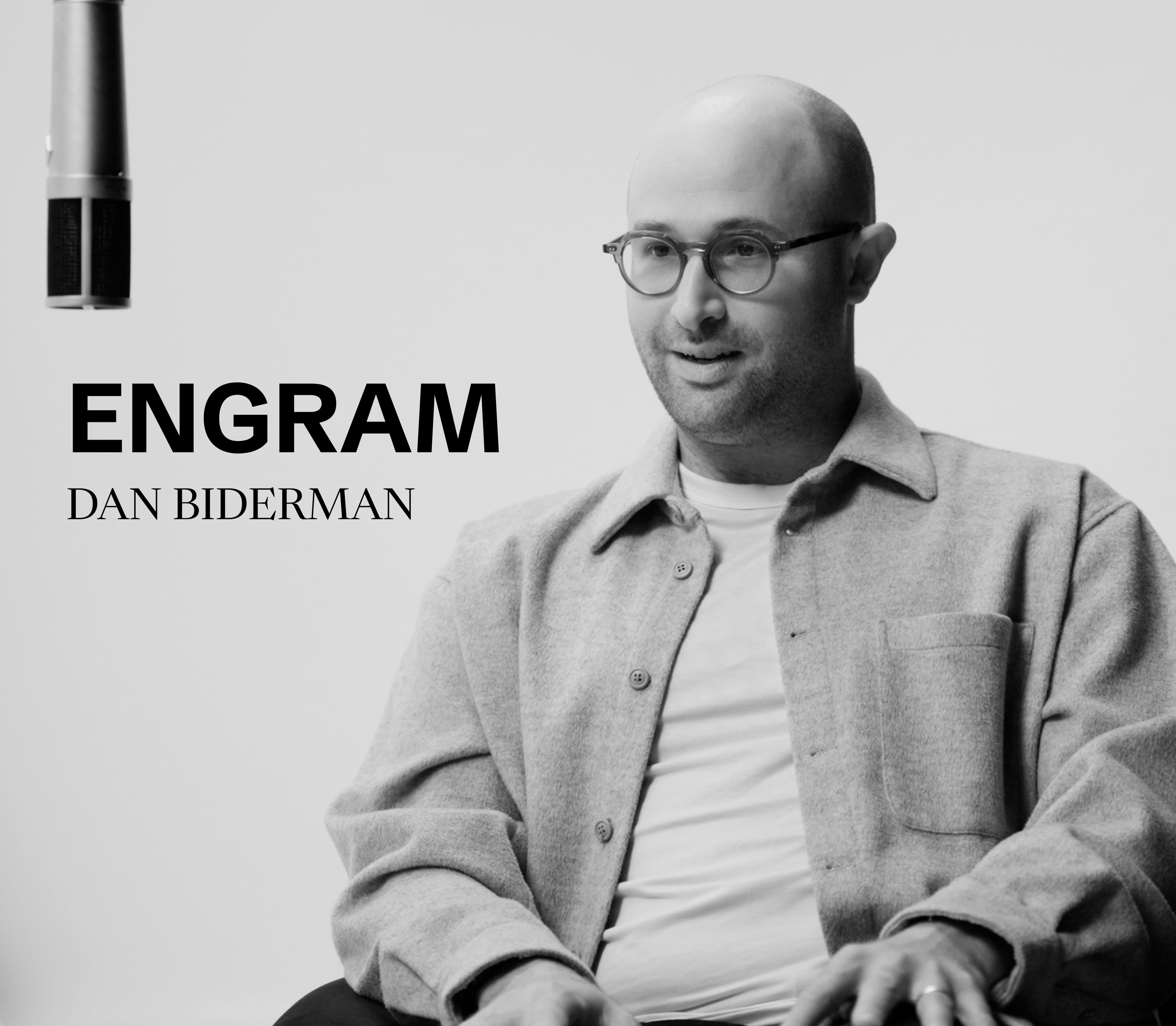
Dan Biderman and Sabri Eyuboglu met in Chris Ré's Research Lab at Stanford and found they'd been chasing the same unfashionable idea from opposite ends. Biderman came to AI from theoretical neuroscience, where memory is the whole game; Eyuboglu spent his PhD on the memory mechanisms inside transformers. The team grew to include co-founders Jessy Lin (MIT), Jack Morris (Cornell) and Scott Linderman (Stanford). Together, they shared a single conviction: the constraint holding AI back is memory, not reasoning power. They left academia to fix it, and have since drawn senior researchers away from tenure and leading AI companies to join them. We were lucky enough to co-lead the first round of funding with Modern Capital.
The problem is structural. Today's models are brilliant and amnesic at once. Because attention gets more expensive as context grows, a model can hold only a narrow window in view; everything else — your prior work, your team's knowledge, an entire codebase — must be re-fed each session, or it's gone. The industry's answer has been longer context windows and better retrieval. But a bigger filing cabinet is not the same as learning. The best model today can outwork a sharp new hire on day one — and it will be no better on day five hundred, because nothing it learns about your world survives the session. The leap from tool to colleague runs through memory.
Engram's bet is that the fix is changing where knowledge lives. Instead of feeding a model the same material at inference time, over and over, they train it directly into the model's weights. Drawing on that knowledge is cheap, and updating it with new data is orders of magnitude more efficient than re-feeding the material, so the model answers from memory rather than re-reading everything. The approach grew out of a remarkable run of research from the founders — BASED, Cartridges, LoRA fundamentals, Minions, Lin's Active Reading and Sparse Memory Finetuning, Morris’ memorization work — that worked out how to fold an entire corpus into a compact model and keep it learning without the catastrophic forgetting that challenges ordinary fine-tuning. In their early deployments the payoff is already material: models that answer more accurately than retrieval-based agents while spending a fraction of the tokens, and that sharpen as they go — an edge that matters more by the month, as agentic workloads make token costs impossible to ignore & knowledge starts to compound.
The vision is a memory operating system for AI: knowledge organized by user and team, updated continuously from live work at a fraction of the cost. By doing so, a model stops being a frozen snapshot and becomes a system that compounds value the longer it runs. We look forward to partnering with Dan, Sabri, Jack, Jessy, Scott, Chris, and the Engram team as they build the memory layer for intelligent agents.
%201.svg)