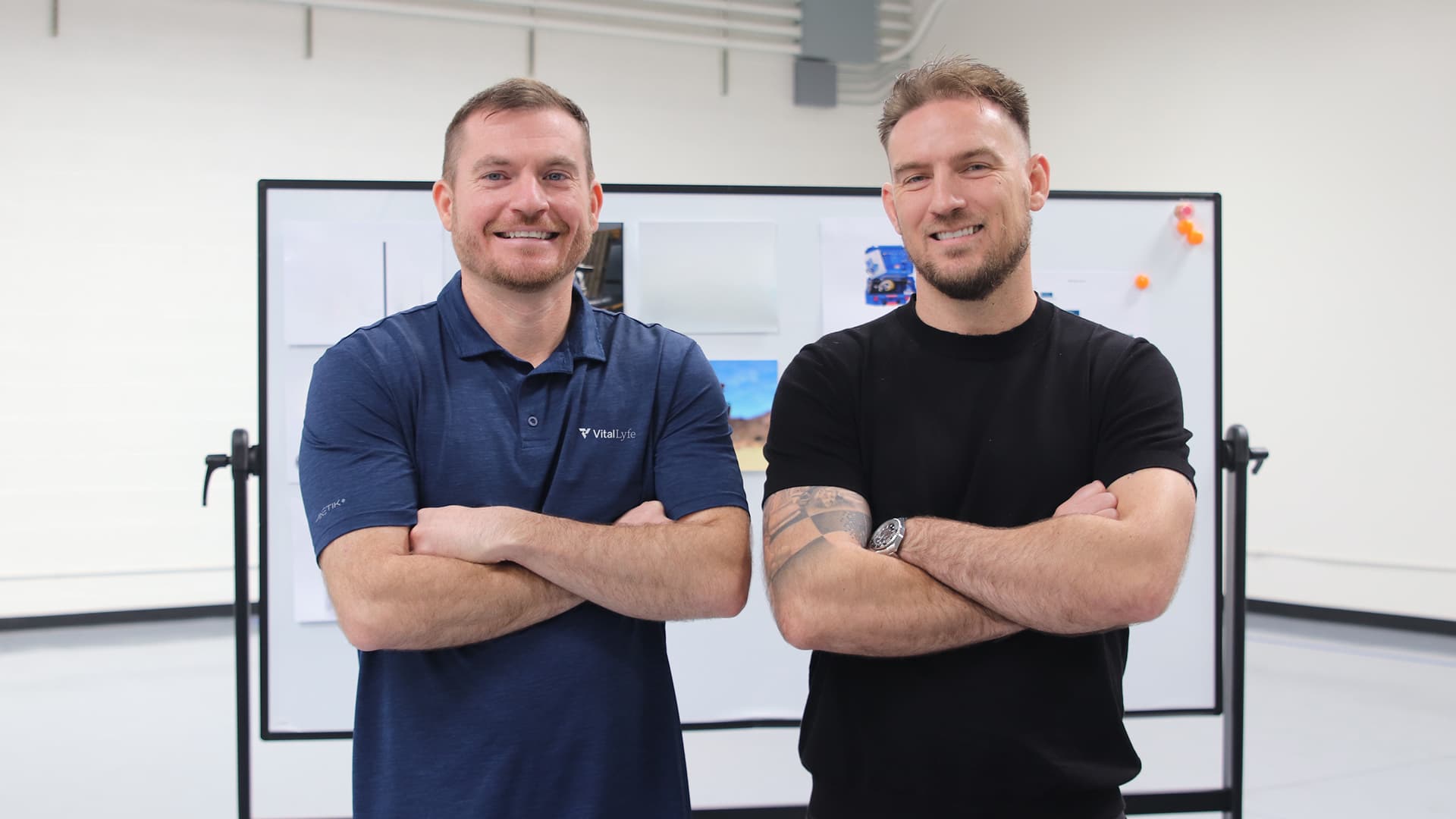
Over two decades at SpaceX, Jonathan Criss and Andrew Harner bonded over a shared obsession: solving seemingly intractable problems with elegant engineering. They also discovered a shared belief that access to clean water should not depend on geography, infrastructure, or luck, which is why they founded Vital Lyfe.
Vital Lyfe is reimagining how we access drinking water, transforming the process from a slow, immovable one that relies on expensive technology to a model that instead uses portable and affordable products. We are thrilled to be co-leading their seed round as Jon and Andrew make their vision a reality.
Clean Water, No Infrastructure Required
At least half of the world’s population experiences severe water scarcity today. As climate change and population growth place greater pressures on water resources, this number is expected to increase. Traditional solutions cost billions to build and power, rely on heavy infrastructure, and are inaccessible to many of the communities that need clean water most.
Vital Lyfe’s first product transforms desalination into a consumer technology, combining optimized reverse osmosis, a modular membrane system, and battery-powered operation into a form factor that anyone can use. Their prototypes have already demonstrated strong performance in real-world testing, garnering interest from government, humanitarian, and maritime partners.
We see potential for this technology to become a new standard in portable clean-water access, with Vital Lyfe’s vision extending beyond a single device. They aim to build a decentralized ecosystem of portable and community-scale systems, mirroring the distributed connectivity network they once built for SpaceX.
We recently sat down with Jon and Andrew to learn more about their vision for the future of clean water access. This interview has been edited for length and clarity.
What insight are you building on that is obvious to you but not to others?
Most people underestimate how fast water scarcity is accelerating and how slowly traditional infrastructure moves. By 2030, global freshwater demand is predicted to exceed supply by 40%. It’s obvious to us that the only scalable path forward is highly distributed, user-centric water autonomy. Our ability to design and build at the limits of physics using true first principles is what finally makes the underlying tech ready to make a real impact in the world.
What impact do you want this company to have on the world?
Reliable, affordable water should work the way WiFi does, where you don’t think about it and it’s just there. By making water generation a decentralized utility, we can unlock resilience and capability at every level. Individuals, communities, and entire regions will gain the freedom to grow, adapt, and thrive.
We like to say that it’s just as difficult to build a large company as it is a small one. How are you thinking about building globally from day one?
Global scale is baked into our day-one decisions, from supply chain and production to recruiting and growth. The idea is that future growth is just turning the knob, not rebuilding the system every time.
%201.svg)